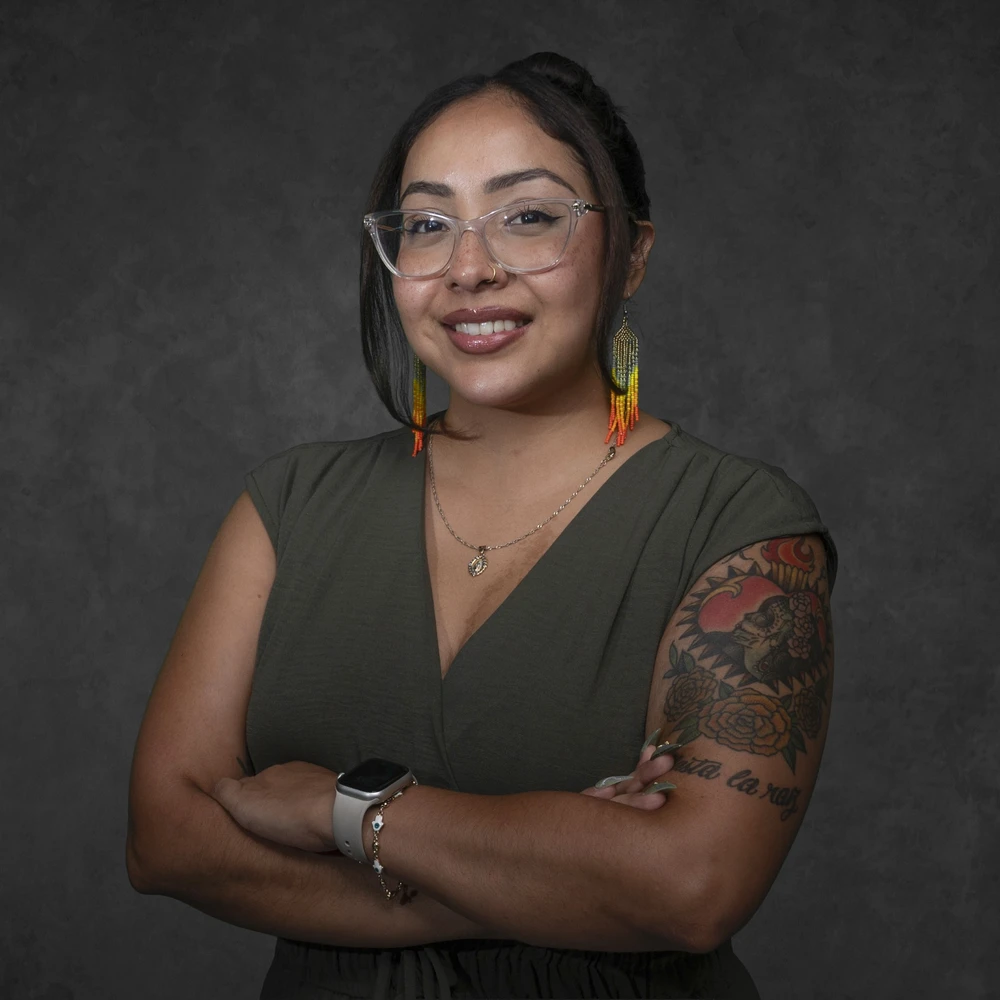
Meet Jasmin Patrón-Vargas (BA, '15, Latina/Latino studies and gender and women's studies) an assistant professor of teaching, learning, and culture at Texas A&M University. She earned her MEd in education policy studies at the University of Illinois Chicago in 2017 and her PhD in curriculum, instruction, and teacher education and Chicano/Latino studies from Michigan State University in 2022. Her research examines how educational systems can better serve minoritized communities. She said her degree in Latina/Latino studies and gender and women's studies was "foundational" to her career and sparked her commitment to studying social structures and educational justice.
Read on for a Q&A with professor Patrón-Vargas to learn more about her career.
Why did you decide to pursue a degree in Latina/Latino Studies?
My interest in history, social movements, and justice began during my K–12 education. However, it wasn’t until I took my first Latina/Latino studies (LLS) course that everything truly clicked. I was immediately drawn in. LLS gave me the language and analytical tools to make sense of my experiences as a Chicana from a working-class background and to connect those experiences to broader social and structural forces.
Did you double major or minor in any other fields while attending the U of I?
Yes, I double majored in gender and women’s studies (GWS). Pursuing GWS expanded my understanding of how power operates through intersecting systems such as race, gender, class, and sexuality. While LLS helped me analyze racialized social structures, GWS deepened my awareness of how heteronormative and patriarchal norms also shape institutions and everyday life.
Did you pursue higher education after undergrad?
Yes, I pursued a master’s in education at the University of Illinois at Chicago. My LLS training was foundational to my graduate studies. LLS pushed me to question whose knowledge is valued in schools and how educational policies and practices impact marginalized communities.
What is your current career? How does a degree in LLS inform your work?
I am currently an assistant professor at Texas A&M University. After graduating, I worked full-time in Chicago Public Schools as an outreach coordinator while completing an MEd in educational policy studies. I later pursued a PhD at Michigan State University, where I double majored in curriculum & instruction and Chicano/Latino studies.
I credit my undergraduate training in LLS and GWS for sparking my long-term commitment to studying social structures and educational justice. Today, LLS informs my teaching, research, and mentorship. I design courses that center historically marginalized perspectives, and my research examines how educational systems can better serve minoritized communities.
How has your degree in Latina/Latino studies shaped your worldview?
LLS shifted my perspective by helping me see how systemic and historical forces shape people’s opportunities and life chances. It also affirmed the strengths, resilience, and cultural wealth of my community. Because of LLS and GWS, I move through the world with a critical lens, constantly asking how power operates and how knowledge can be used to advance justice.
What advice do you have for students interested in pursuing work in your field?
At a time when ethnic studies and the liberal arts are being challenged, I remind students that our ancestors fought for us to have access to this kind of education. These programs exist because of their resistance and vision. Earning a degree in LLS isn’t just personal; it’s part of that ongoing struggle.
What does a typical workday look like for you? What is the most interesting aspect of your job?
One of the most interesting aspects of my job is that no two days look the same. Some days I am preparing and teaching classes to undergraduate students, while other days I am collecting data for research projects, writing, or meeting with students for mentorship.
What is your proudest achievement?
As a Chicana from Chicago’s southwest side, La Villita, I am most proud of being the daughter of immigrants from Guerrero, MX, and a product of Chicago Public Schools and the barrio. My achievements are not mine alone. They’re built on the sabiduría, resistencia, and love of family, community and antepasados.