What does it mean to create a trauma-informed and healing-centered classroom? How can we support teachers in creating safe spaces for students where they can be their authentic selves?
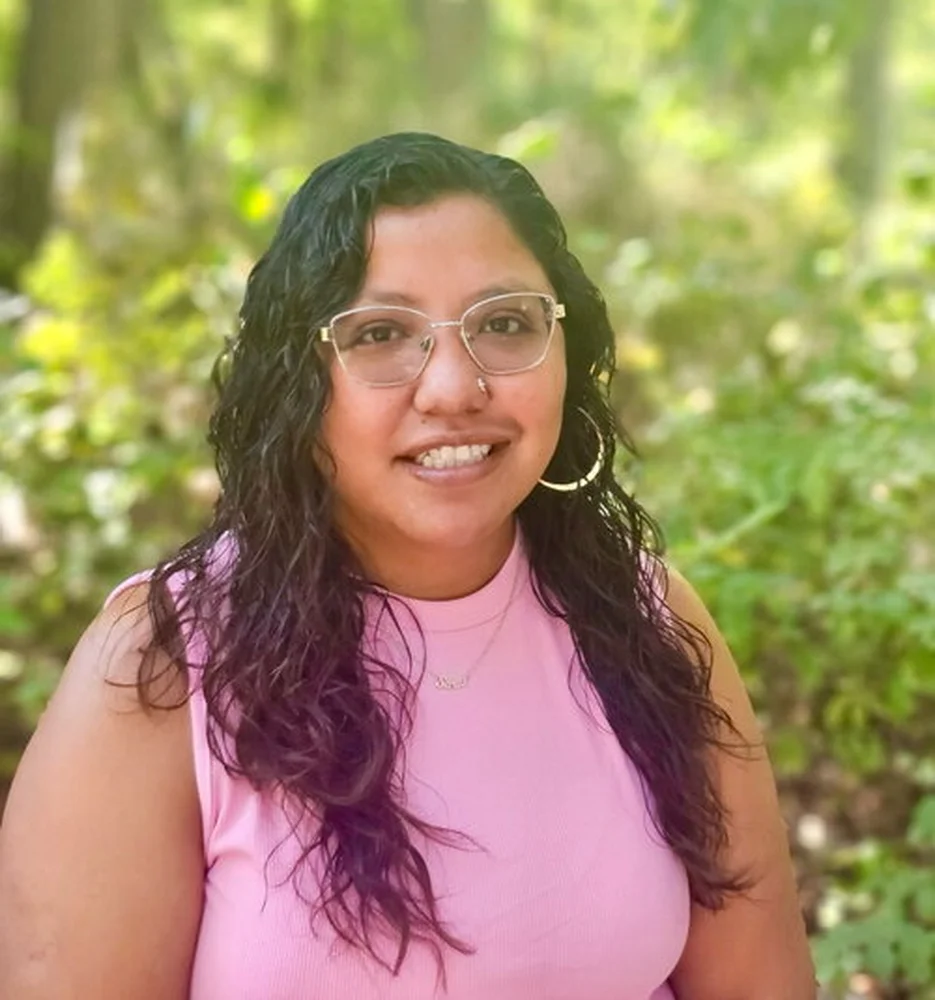
These are some of the questions that Saraí Blanco Martinez, a Chancellor's Postdoctoral Research Associate in the Department of Latina/Latino Studies, grappled with in a recently published co-authored article that explores trauma-informed and healing-centered pedagogical methods.
Blanco Martinez is an interdisciplinary scholar who draws from the fields of psychology, education, and social work to better understand how systems of oppression contribute to the experiences of marginalization of Latinx immigrant families.
She received her PhD at the University of Michigan, and her co-authored article, “Embodying the Learning: Trauma-Informed and Healing-Centered Praxis” published in The Educational Forum, grew of out of a course she took in her PhD program with Sharim Hannegan-Martinez, a professor of educational studies. The course taught students about trauma-informed and healing-centered practices in education and modeled what a classroom engaged with these methods should look and feel like. The course aimed to provide more support for future teachers who may be asked to utilize trauma-informed approaches in the classroom.
“Too often, we are asking teachers, researchers, and practitioners across the Pre-K-Post-secondary spectrum to engage in a type of teaching they have never experienced, to create a learning space without knowing what it should look and feel like,” the co-authors wrote in the article.
Blanco Martinez and her fellow doctoral students—Catherine Ventura, Jada Childs, Marquise Griffin, and Ayleen Correa—were selected to work with Hannegan-Martinez on the article to explore what supported their learning about trauma and healing in the course.
Using Chicana Feminist methodologies to reflect on their experiences, they identified four practices integral to creating a trauma-informed and healing-centered classroom.
The practices they identified—safety and agency, rituals and routines, emotions and embodiment, and love and belonging—center around creating a classroom where students feel like they have the agency to choose their level of participation, feel supported when they express vulnerability, feel a sense of belonging, and are invited to connect with their bodies and emotions.
These practices they said are especially important for students of color, who often do not feel supported in the classroom and can feel like they need to leave part of themselves outside its doors.
“It was the first time where I think all of us experienced what theorizing about healing could look like, in a way that feels healing. And in a way that our experiences feel honored and respected and brought into the classroom space,” wrote Blanco Martinez in the article.
The authors argue that incorporating embodied learning into the classroom will counteract the mind/body split in Western academia and nurture a connection between the body, mind, and spirit that contributes to collective healing and well-being.
“We hope that these strategies support other educators and teacher-educators to create spaces that feel strong enough to hold their wounds, help them understand trauma in the context of structural oppression, and support them to develop the skillsets to continue healing, teaching, resisting, and imagining toward an otherwise—one where we are all more well,” the co-authors wrote.