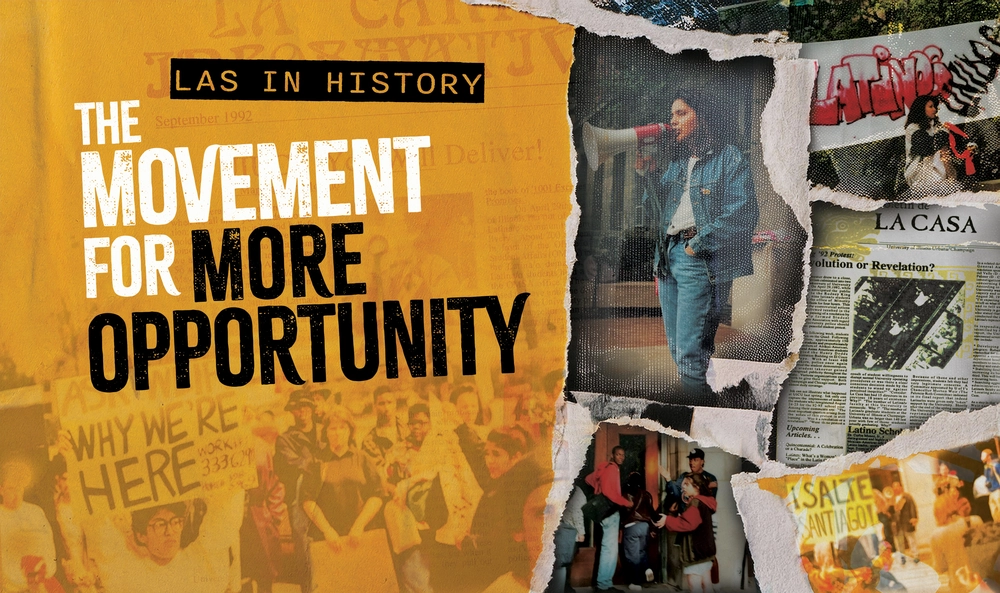
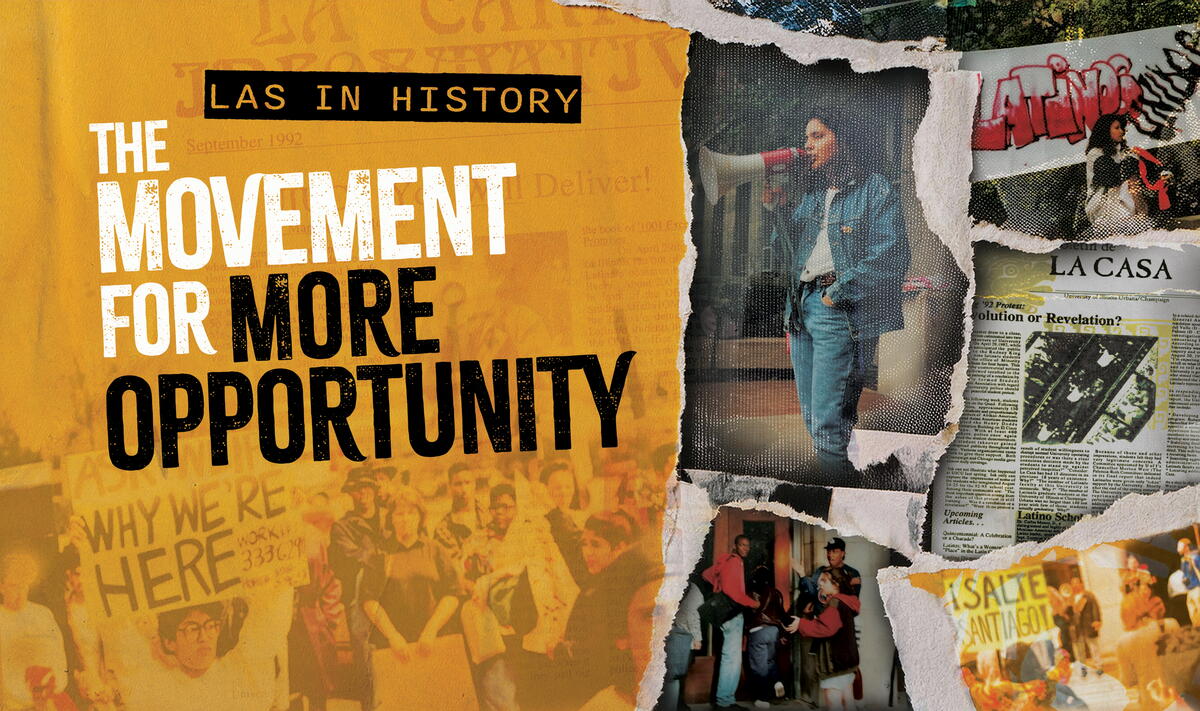
Two rows of students lined the hallway of the Henry Administration Building, chanting, “The people, united, will never be defeated!” It was May 5, 1992. Cinco de Mayo. Finals were due, but for the more than 450 people, including students, faculty, and staff, who came out to fight for increased institutional support for Latina/o students and programs on campus, their cause was more important.
Mary Carmen Moreno (BA, ’01, Latin American and Caribbean Studies), a first-generation student and sophomore at the time, knew the stakes were high.
“I went in well aware that if this goes wrong, I literally can be out of school and that would be devastating for me,” she said. “But when you’re young, you take the risk … And we just had a lot of hope.”
Moreno was the assistant editor of the newsletter, La Carta Informativa, a key tool in the movement for Latina/o support on campus. The students’ demands, published on April 24, 1992, called for creating a Latina/Latino studies program; hiring additional Latina/o faculty, staff, and administrators; increasing funding for the cultural center La Casa Cultural Latina, which provides educational, cultural, and sociopolitical programs; and strengthening recruitment and retention efforts for Latina/o students. They also called for eliminating Chief Illiniwek and for the university to support Indigenous students, many of whom have Latina/o heritage.
She and her fellow activists had been building toward this moment for years, organizing forums and teach-ins to educate students about the issues and ways they could get involved. Building relationships was crucial to getting people to show up for the Cinco de Mayo protests.
Read the full story at STORIED
Editor's Note: This piece was adapted from a story about the history of the Department of Latina/Latino Studies.