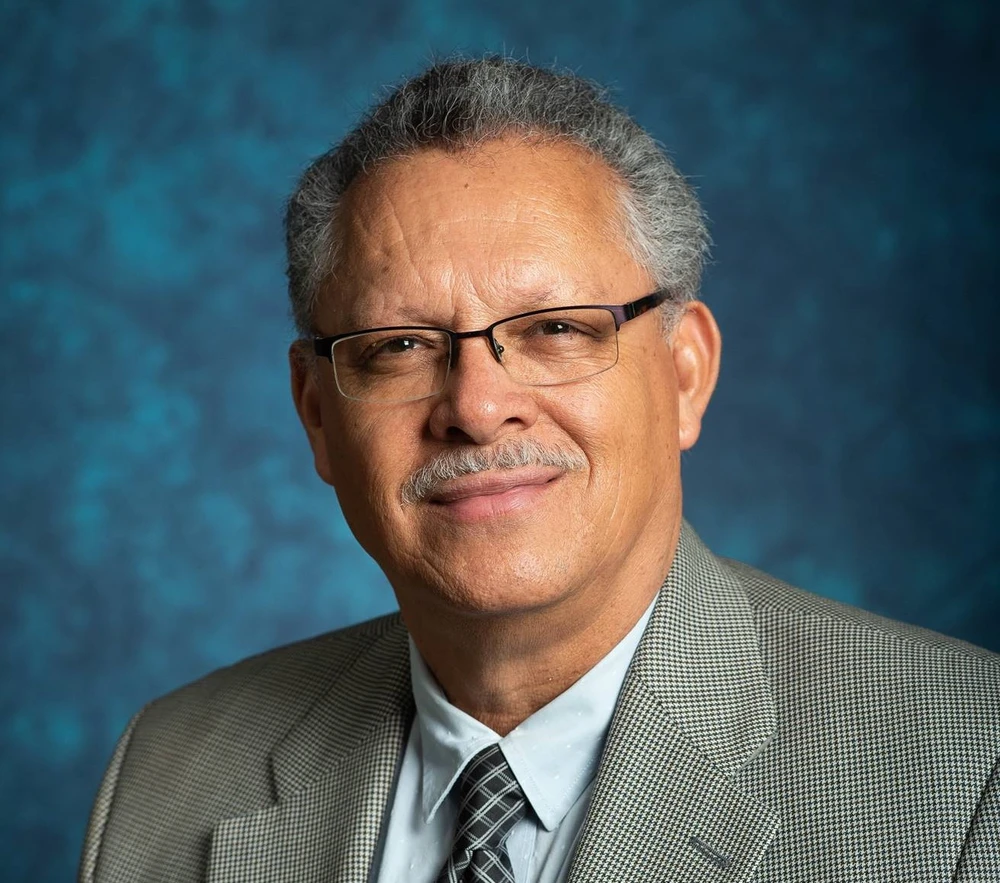
This year marks the 30th anniversary of the Department of Latina/Latino Studies. We caught up with former professor Alejandro Lugo, who was there at the beginning in 1996 and played a significant role in the formation of the program. We asked him to share his favorite memories, reflect on the importance of the anniversary and tell us about what he's working on now. Read his interview below.
Briefly, tell us about your time as an anthropology and Latina/Latino studies professor at the University of Illinois. What classes did you teach?
I taught anthropology and Latina/Latino studies at the University of Illinois at Urbana- Champaign for two decades, from 1995 to 2015. The Latina/Latino Studies Program officially started in 1996, which means that I taught Latina/Latino studies courses and anthropology courses since the beginning of the program, and definitely throughout the rest of the 1990s and through the first 15 years of the 2000s: until 2015.
Through my 20 years there, I taught both undergraduate courses as well as courses for graduate students. In 1996-1997, I taught one of the first “LLS 100: Introduction to Latina/Latino Studies” courses for LLS (perhaps Rolando Romero taught the first one?). Most of my courses were cross-listed with anthropology, so they were LLS/Anth courses for sure. Annually, I taught “LLS/Anth 259 Latina/o Anthropology” and/or “LLS/Anth 472 Border Latina/Latino Cultures”. I also once taught “LLS 250 Latinas/os on the Bronze Screen”, which was NOT cross-listed with Anthropology. Once the graduate students started taking courses in LLS, several doctoral and Masters students would take my LLS/472 Border Latina/Latino Cultures and other graduate seminars I taught on Border Theory, Colonialism and Post-Colonialism, and Gender in Latin America. Because my specialty was the U.S.-Mexico border and border crossings in Latina/Latino communities, I made sure (as soon as I arrived on campus in 1995-1996) our LLS students learned the literature on border studies, border crossings, and border theory through my anthropological lens and beyond.
What role did you play in the formation of the Department of Latina/Latino Studies?
In order to have a new program of study, a university needs to have faculty to teach the courses the students would need to take in order to graduate. It is important to underscore that the reason the University of Illinois at Urbana-Champaign started the Latina/Latino Studies Program in the mid 1990s was because LLSP was one of the demands of the 1992 Latina/Latino student mobilization, which also led, in turn, to the hiring of more Latina/Latino faculty on campus during that time.
Back in 1995-1996 and 1996-1997, there were very few of us Latina/Latino faculty responsible for teaching LLS courses for the program. From 1995 to 2000, several faculty members ended up leaving the university either because they did not get tenure or because they were recruited by other universities. The latter situation meant that those of us who stayed but were assistant professors had to succeed at getting promoted to associate professors with tenure and then to full professors. The latter promotions usually take at least 10 years in our American system of higher education. As a professor who succeeded at getting promoted from assistant professor to associate professor and then full professor, I saw my role in the formation of the Department as being central (along with other colleagues, of course) to making sure the necessary courses were taught for our students, who in turn needed to be advised, supported, and mentored, but also to help mentor the junior faculty that we had to hire as time went on.
Personally, for instance, I was directly involved (via my committee responsibilities) in the hiring and promotion of some LLS faculty who later became tenured professors and Department and/or College administrators, as well as helping to recruit not only graduate students to campus but also post-doctoral fellows.
The Department celebrates its 30th anniversary this year. What does LLS and this historic milestone means to you?
The Department of Latina/Latino Studies means the world to me; being part, from its beginnings, of such a historically significant academic unit at the U of I has been one of the major highlights of my professional career. LLS is a unique and magnificent contribution not just to the State of Illinois and the University of Illinois in particular but even more importantly to American higher education more broadly: past, present and future!
The Department of Latina/Latino Studies at the University of Illinois is both a higher education miracle and a higher education gem. At the time that I and several other colleagues were hired in the mid 1990s to help establish an academic unit focused on Latina/Latino Studies, we knew, of course, that we were standing on the shoulders of Chicana/Mexican American studies, Boricua/Puerto Rican studies, Cuban American studies, and Dominican studies. But in the mid 1990s no other region of the country had a LLS Program or Department like the one we were creating at the U of I—an academic unit that included, in a comprehensively pan-ethnic manner, all of the U.S Latina/Latino communities that have a history in Latin America and the Caribbean.
Even today, there are not that many Departments of Latina/Latino Studies that recruit, house, and promote to tenured professorships their own tenure-track faculty. Without a Latina/Latino Studies Program or Department, you really do not have robust academic minors, majors, and graduate training in Latina/Latino Studies for the country’s college/university students, who are the future professionals of our nation and the world.
I am very proud to note that several of our former LLS students have become highly successful and prominent figures in their own professions. Journalist Alex Perez, outstanding national journalist who has worked for ABC television news for years, was one of the many students who took my LLS 100 Introduction to Latina/Studies back in the 1990s; and associate professor Mirelsie Velazquez was one of the graduate students who took my “LLS 472 Border Latina/Latino Cultures” seminar when she was a student on campus.
Lastly, I am also very proud of the fact that several of my U of I doctoral students/advisees, who are now successful professors themselves, as well as book authors, graduated from the University of Illinois with a “Graduate Minor in Latina/Latino Studies” from the Department of Latina/Latino Studies. My last PhD student advisee in anthropology, Dr. Julie Torres, who completed her doctoral degree in 2020 and whose doctoral research focused on Puerto Rican women and their political participation in Orlando, Florida, received the 2021 “Best Doctoral Dissertation Award” from the Puerto Rican Studies Association. These are, of course, just a sample among a long and vast multitude of examples…
Do you have any favorite memories from your time in the Department?
My fondest memories of my time in the Department of Latina/Latino Studies are definitely many and they go back mainly, though not exclusively, to every single Latina/Latino Commencement graduation ceremony I attended throughout my 20 years as LLS faculty member; while at the graduation ceremony and from the stage, I could see (and still see in my mind) the Latina/Latina/Latinx students graduating and finishing their professional degrees, celebrating along with their familias—their parents, their abuelitos and abuelitas, and their primos y primas, and with the whole Latina/Latino community united in our celebration of the success of OUR LLS graduates!!! I loved so much seeing the LLS students graduate with their degrees in hand and meeting, sometimes for the first time, their happy parents and grandparents.
In my mind, I still see our LLS students in their caps and gowns going back home smiling and cheering, along with their families, at the end of the ceremony. I always knew, at the end of their Commencement ceremony, that they would be completely fine in their professional careers and that I was going to be there for the next Latina/Latino/Latinx student cohort the following year.
Can you tell us about your work as a photographer and any current research projects?
For several years now, I have been taking photographs to capture and document nature, everyday life, and the transformation of society—all in order to support artists and their art communities. I have shown my artistic and documentary photography in several art galleries and museums across the country. Some of my photographs are in the permanent collection of the National Museum of Mexican Art in Chicago and in the permanent collection of the National Museum of Puerto Rican Art and Culture, also in Chicago. Three of my photographs on immigration and border crossings are part of the permanent art collection of the Krannert Art Museum of the University of Illinois at Urbana-Champaign.
I continue to publish in scholarly venues; more recently, one of my chapters on Border Theory appears in The Border Reader (2023), edited by Gilberto Rosas and Mireya Loza and published by Duke University Press; and one my articles on the U.S.-Canada border appears in “The Other Border”, published in the 2025 issue of the Review of International American Studies.
In 2024, I received the “Anthropology in Media Award” from the American Anthropological Association for my photographs and for my Letters to the Editor in such major national newspapers as the New York Times, the Los Angeles Times, the Chicago Tribune, and the Chicago Sun-Times.