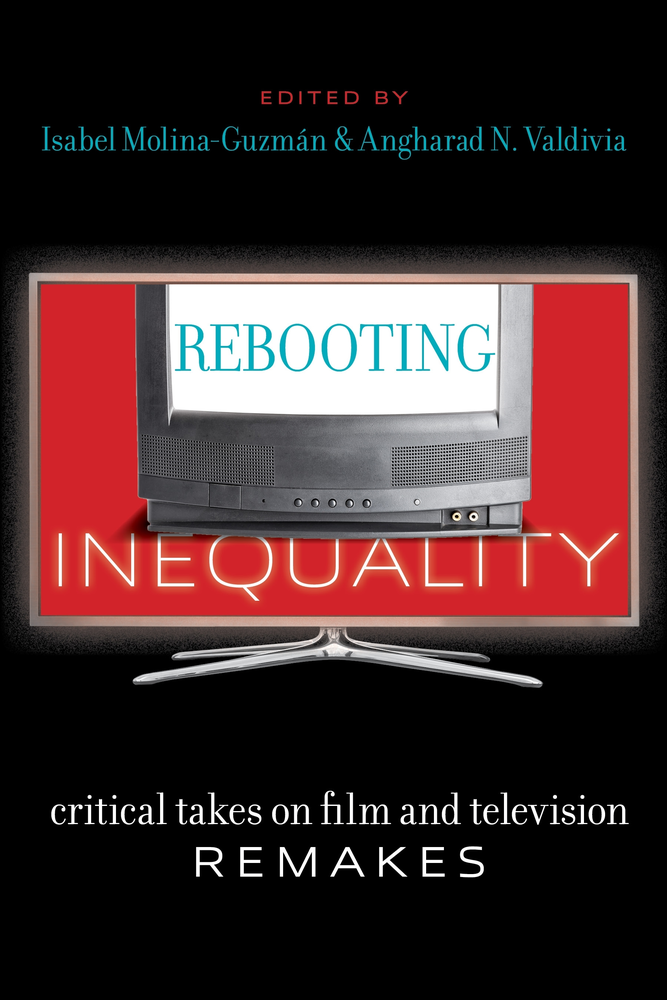

From Ghostbusters to Charmed, reboots, remakes, and revivals of TV shows and movies have flooded Hollywood over the last decade. A new collection of essays examines how the contemporary reboot craze perpetuates systemic biases around race, gender, and sexuality.
Rebooting Inequality: Critical Takes on Film and Television Remakes (NYU Press) is edited by Isabel Molina-Guzmán, Associate Dean for Student Academic Affairs in the College of LAS and professor of Latina/Latino studies and communication, and Angharad N. Valdivia, emerita professor of Latina/Latino studies and the Institute of Communications Research.
Across twelve essays, contributors explore how the industry’s return to familiar stories limits opportunities for stories created by or featuring BIPOC people, and the industry’s overreliance on white, patriarchal, and heteronormative frameworks for storytelling and production.
“We think that the politics of nostalgia has been part of what's driving audience desire for these older texts that arose at a time that people perceive to be as less conflicted, less politicized, safer, more comfortable,” said Molina-Guzmán. “So we contextualize it in that moment to explain why we have this constant desire to go back to a nostalgic past that never really existed, but in people’s memory they remember it as their happy place when the show was on.”
The collection also looks at reboots, like Charmed or Doctor Who, that flip either the gender, race, or sexual identity of the cast members and the audience response.
“The really hostile reactions to those reboots tell us about the politics of racial nostalgia and resentment and the desire by some fans to continue to want to see U.S. culture represented in a particular way,” said Molina-Guzmán. “So that anytime you flip, the casting is seen as somehow an affront to their nostalgic memory of the show, but really what they're talking about is their comfort with whiteness and discomfort with racial, ethnic, gender or sexual difference.”
Overall, the collection illustrates how rebooted, revived, and remade media that perpetuates the status quo relies on inequality to limit risk and maximize profits for media conglomerates.