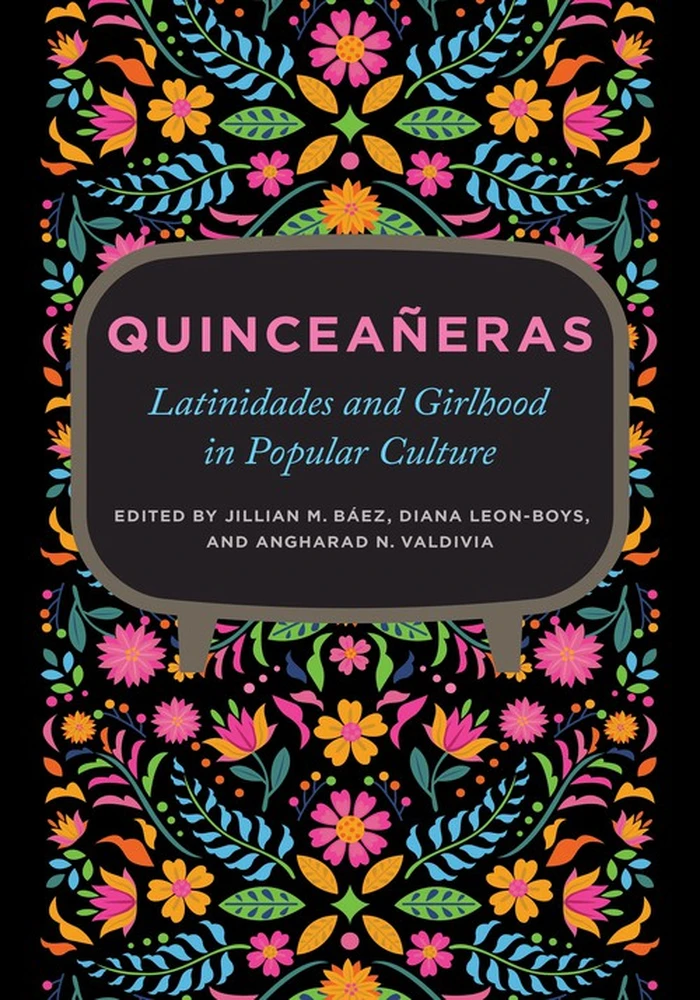
Quinceañeras, also called quinces, are a coming-of-age practice for girls turning fifteen in much of US Latina/o and Latin American cultures. The event is immersed in gender politics and consumer culture while speaking to Latina/o assertions of culture, belonging, tradition, and assimilation. A new collection of essays co-edited by Angharad N. Valdivia, emerita professor of Latina/Latino studies and the Institute of Communications Research, with alumnae Jillian M. Báez (PhD, ’09, communications) and Diana Leon-Boys (PhD, ’20, communications and media studies, Latina/Latino studies minor), explores the increasing visibility of quinceañeras in popular culture.
In Quinceañeras: Latinidades and Girlhood in Popular Culture, contributors use film and media studies, gender and girlhood studies, and Latina/o studies to explore popular depictions of quinceañeras in mainstream films and TV shows and how they are often used to add the appearance of Latina/o authenticity to mainstream narratives. They also examine how quinceañeras chart increasing openness and inclusivity in Latinidad by looking queer and non-binary experiences, non-traditional quinceañeras, and cincuentañeras, which reclaim quinces as fiftieth birthday celebrations
Angharad N. Valdivia’s essay in the volume “Our Dream Quinceañera Exhibit: Foregrounding Joy and Labor in Gendered Ethnic Production” covers the exhibit she curated with PhD student and LLS graduate minor Stephanie Perez, and alumnae Ariana Cano (PhD, ’24, communications and media studies), and Dora Valkanova (PhD, ’20, communications and media) at Spurlock Museum in 2022 which was the inspiration for the edited collection. “Quinceañeras: Celebration, Joy, and Ethnic Pride” highlighted the joy of quinceañera celebrations in the U.S. using artifacts, photographs, and documentary videos. The collection also features essays from alumnae Jillian M. Báez, Diana Leon-Boys, Ariana Cano, and graduate student Stephanie Perez.
“Together the chapters in this book consider the quinceañera celebration as a lens to understand Latina girlhood and womanhood in the contemporary moment,” the co-editors wrote in the introduction. “In the wake of an age where citizenship is often conflated with consumption, these chapters problematize the commercialization and mediatization of quinceañeras and offer suggestions for how we might understand gender, age, ethnicity, and class in more-nuanced ways that allow for a broadening of Latinidad within U.S. media and popular culture.”